

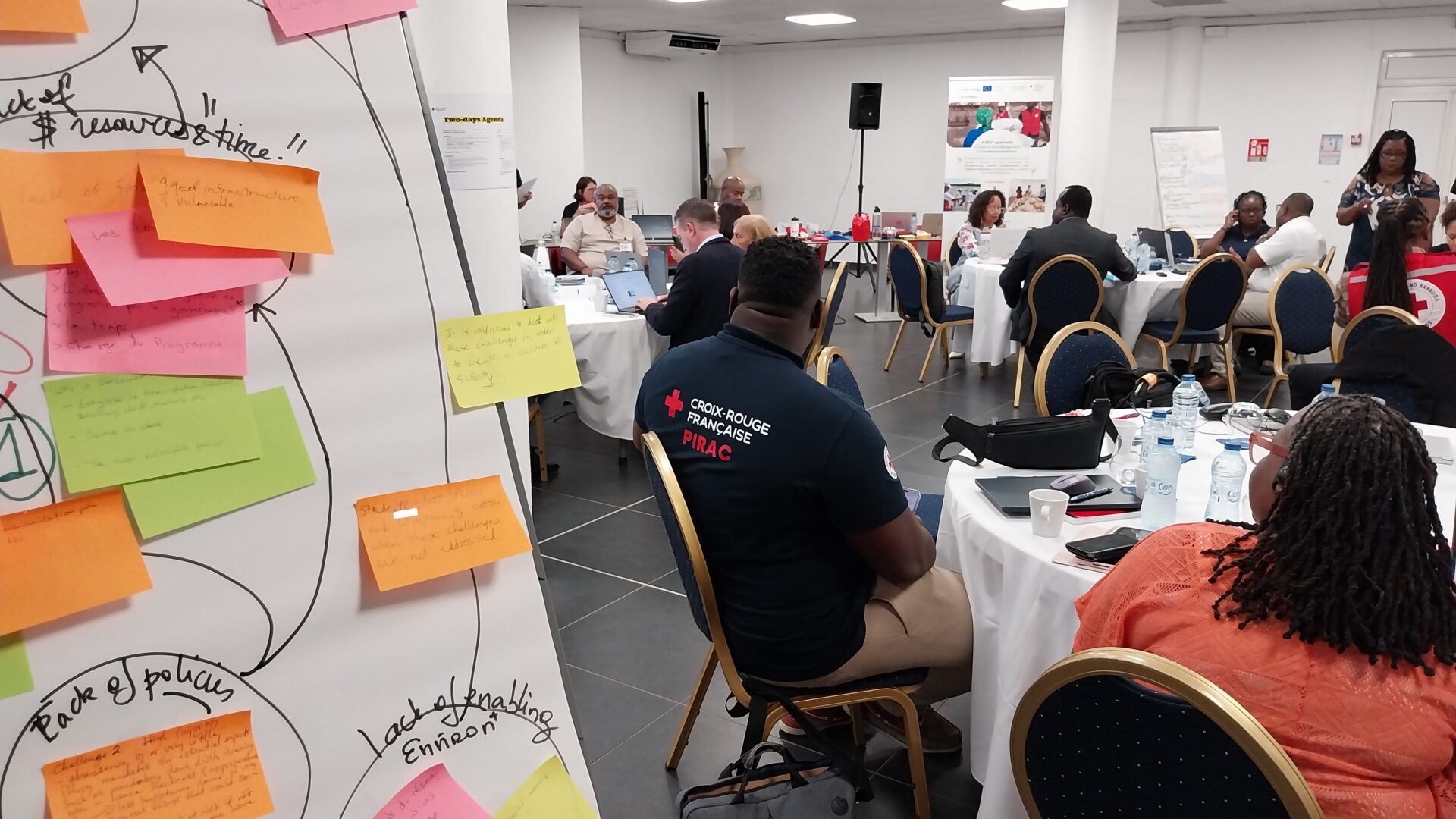
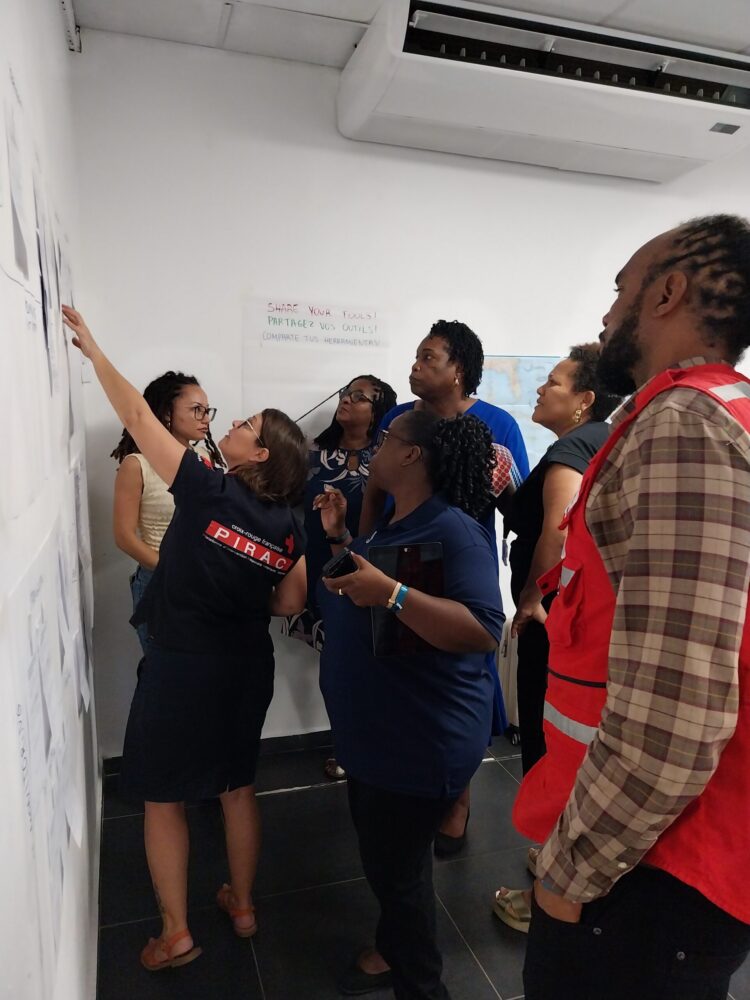
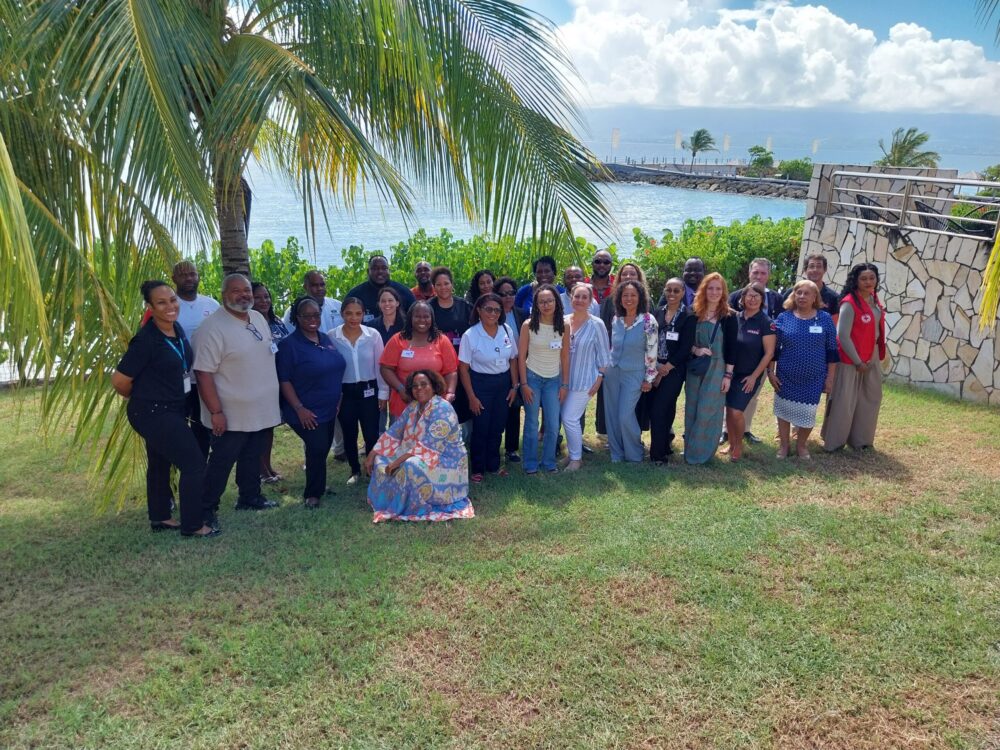
On 27 and 28 October 2026, PIRAC brought together education and disaster risk reduction (DRR) stakeholders from across the Caribbean in Guadeloupe. Over two days, representatives from ministries, Red Cross National Societies, and local, regional and international organisations shared their experiences and identified four key priorities to sustainably strengthen disaster risk reduction and school resilience across the region: strengthening regional cooperation, ensuring young people’s safety and participation, promoting social cohesion and psychosocial well-being, and sharing good practices to demonstrate the impact of DRR in schools.
Schools: key players in disaster risk prevention
Hurricanes, earthquakes, tsunamis and floods: the Caribbean is particularly exposed to disasters. In this region, preventing risks and preparing communities to face them also starts at school.
Learning to recognise hazards, knowing how to respond and understanding safety instructions help children protect themselves and share good practices with their families and communities. Education professionals play a key role in passing on this knowledge. Teachers must also feel safe and prepared themselves in order to ensure their students’ safety.
Disaster risk education is the third pillar of the Comprehensive School Safety Framework (CSSF), an international reference framework developed by the Global Alliance for Disaster Risk Reduction and Resilience in the Education Sector (GADRRRES). It is built around three complementary pillars: safe school facilities, school safety and educational continuity management, and disaster risk reduction and resilience education.
In the Caribbean, this framework is implemented through the Caribbean Safe School Initiative (CSSI), launched in 2017. It brings together education ministries across the region around shared commitments to strengthen school safety. Its main regional event is the Ministerial Forum on School Safety, held every three years. The most recent edition took place in Saint Lucia in 2025, with the next scheduled for 2028.
All three pillars are essential to ensuring school safety. The third pillar, focused on disaster risk reduction and resilience education, must receive equal attention to ensure inclusive and sustained learning over time.
Local experiences worth sharing
For more than eleven years, the French Red Cross has been developing disaster risk prevention activities in schools. Initially developed in the Pacific and then in Réunion through the Paré pas Paré project, this approach was subsequently adapted to the Caribbean context through Paré pa Paré in Guadeloupe and Fok Nou Paré in Martinique.
In 2023, PIRAC launched the Let’s be Prepared project to encourage experience-sharing and strengthen exchanges between stakeholders across the region. Since 2025, it has also been supporting Red Cross initiatives in Dominica and the Dominican Republic, drawing on its experience to help develop their own approaches.
The regional workshop provided an opportunity to explore other initiatives. The Antigua and Barbuda Red Cross presented its first aid training activities in schools, its work with children with disabilities and the educational tools it has developed to raise young people’s awareness. The Grenada and Saint Lucia Red Cross Societies also shared initiatives that encourage young people to become agents of behavioural change.
Meanwhile, CDEMA and the Guadeloupe Education Authority presented DRR and sustainable development projects designed to create educational games. These experiences demonstrate the diversity of approaches adapted to local contexts. They all highlight the importance of involving young people and taking an inclusive approach that reflects the capacities of institutions, partners and communities. They also offer opportunities for mutual learning.
As Dr José Humphreys, President of the Antigua and Barbuda Red Cross, put it: “Learn by doing and learn by creating.” Learning through action, but also through creating alongside education professionals and children, whose creativity is a valuable resource for designing appropriate prevention tools.
Four priorities to strengthen school safety across the Caribbean
The regional workshop led to a series of recommendations aimed at ensuring a coordinated and sustainable approach to strengthening the resilience of education systems across the Caribbean.
1. Strengthen coordination among key stakeholders
French-, English- and Spanish-speaking territories have complementary experiences, resources and expertise. Yet exchanges between these different linguistic areas remain limited.
The workshop highlighted the need to establish working groups and regular dialogue spaces bringing together territories and key stakeholders. These would help build a shared vision, identify priority issues and define joint actions to better integrate disaster risk reduction (DRR) into the education sector. They would also provide opportunities to share good practices across territories.
One of the main challenges is the lack of resources, whether human, financial or time-related. Participants therefore recommended carrying out regular
stakeholder mapping exercises to identify key organisations, available resources and expertise, as well as existing needs and gaps. This would help support the effective and sustainable integration of disaster risk reduction into the education sector.
2. Measure and highlight initiatives through knowledge management
Much of the discussion focused on demonstrating how initiatives contribute to strengthening disaster risk awareness in schools. Although numerous activities are being implemented across the region, information about their effectiveness and long-term sustainability remains limited.
While regional tools already exist, such as the Caribbean Safe School Initiative (CSSI) Roadmap and CDEMA’s Model Safe School Kit, there is still a need for harmonised and standardised information management tools, as well as a robust monitoring and evaluation system.
Integrating disaster risk reduction into the education sector through concrete measures would help demonstrate the human, material and financial costs of inaction, while highlighting the need to invest in prevention. For example, governments could commit to allocating funding from national budgets to ensure that initiatives continue beyond the lifetime of individual projects.
3. Involve young people in projects and decision-making
Children and young people are often the main beneficiaries of disaster risk prevention activities. They should therefore also be actively involved in shaping them.
Participants stressed the importance of involving young people in the development of educational resources, disaster risk reduction projects, planning and decision-making. Young people bring a different and engaged perspective to disaster risk awareness, as well as valuable skills and knowledge in areas such as inclusion, gender and protection.
Recommendations included creating spaces for dialogue to strengthen youth networks and their role in governance in the fields of disaster risk reduction and education.
Several approaches could be developed, including youth networks, ambassador programmes, workshops to create educational tools and opportunities to participate in discussions on school safety.
The challenge is to move from an approach that delivers disaster risk education to young people towards one that is also developed with them. Giving them a voice in decision-making also means recognising their ability to raise awareness among their families and communities.
4. Train education professionals, including in mental health and psychosocial well-being
Without education professionals who have the skills to deliver disaster risk prevention information in a professional and appropriate way, it will be difficult to develop a strong culture of risk awareness in schools.
Just as disaster risk reduction needs to be integrated into school curricula, strengthening the capacities of education professionals is essential. They need access to tailored training, inclusive educational resources and teaching materials to help students understand and adopt appropriate behaviours when facing hazards.
One proposal is to develop a comprehensive, interactive and engaging training programme for different education stakeholders, including education ministries, school principals, education officers and teachers. It could draw on a range of educational materials, such as videos, presentations, fact sheets and quizzes, to support the uptake of knowledge and good practices in disaster risk reduction.
To ensure visibility, institutional ownership and long-term implementation, this programme could also be regularly included on the agenda of Education Ministers’ Council meetings.
Disaster risk prevention is not limited to knowledge and the behaviours needed to respond to a disaster. It must also take into account the emotional safety and well-being of teachers, school staff and children.
Discussions highlighted the importance of mental health and psychosocial support in schools. A child who feels unsafe or is experiencing distress is not in the right conditions to learn.
Following a disaster, psychological impacts can also persist long after the emergency phase. Teachers therefore need training to recognise signs of distress among students, even long after an event, and refer them to the appropriate professionals.
Child protection and psychosocial support must therefore be more fully integrated into school safety strategies and disaster risk reduction education activities.
PIRAC: facilitating exchanges among Caribbean stakeholders
This workshop confirmed the importance of building bridges between the different stakeholders and territories involved in school safety across the region.
Red Cross National Societies have field experience and in-depth knowledge of local communities that deserve to be better recognised by partner organisations, including ministries and regional institutions. Conversely, regional and international organisations provide frameworks, resources and coordination mechanisms that can support local initiatives developed by all stakeholders working in disaster risk reduction and education.
Following this workshop, PIRAC recognises the stakeholders’ shared interest in continuing to learn from one another and in highlighting initiatives developed by Red Cross National Societies and their partners across the region.
This approach is based on complementarity: better understanding existing initiatives, facilitating the sharing of resources and enabling territories to build on experiences already developed rather than starting from scratch.
As Olga Mussington, from the Sint Maarten Ministry of Education, reminded participants during the workshop: “Build the system before you need it.”
The challenge now is to sustain this momentum beyond regional meetings and gradually build a more coordinated approach to disaster risk education across the Caribbean.
This workshop is part of Phase 3 of the 3 Océans / READY 360° programme, funded by the French Development Agency (AFD) and the Interreg Caribbean programme.
PIRAC | Plateforme d’Intervention Régionale Amériques Caraïbes de la Croix-Rouge Française 41 rue Bébian – 97110 Pointe-à-Pitre-Guadeloupe