

Protection, Gender and Inclusion in the Caribbean
A disaster is never “neutral.” Behind material damage lie human realities that are often invisible. During the 2021 eruption of La Soufrière in Saint Vincent and the Grenadines, 40% of the population was displaced. In shelters, most of those present were women, children, and elderly people. Yet nearly 9 out of 10 shelters did not record women separately from their male partners.
In the Caribbean, whether after a storm, a volcanic eruption, or an earthquake, existing inequalities are amplified. After Hurricane Maria in Dominica, 61% of people still living in shelters three months later had at least one vulnerability: advanced age, chronic illness, or being part of a female-headed household.
The figures are clear: gender, age, disability, and social status directly influence how people experience a crisis and how they recover from it.
PGI at the Heart of the French Red Cross Commitments
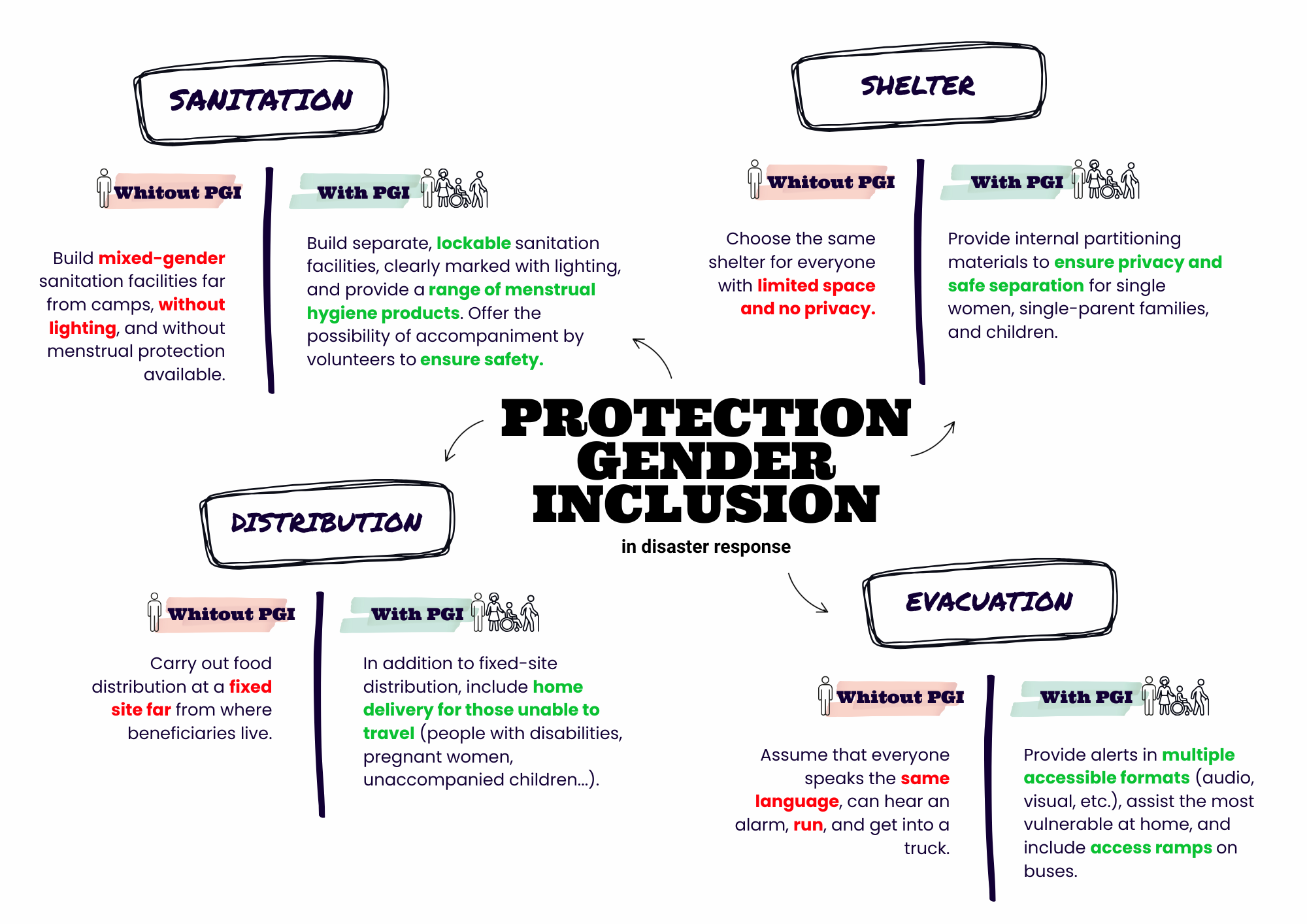
The French Red Cross integrates the “Protection, Gender and Inclusion” (PGI) approach into all of its actions.
The PGI approach is based on three complementary pillars:
- Protection means preventing violence and ensuring that everyone is safe from harm;
- Gender and diversity means recognizing that we do not all have the same needs, risks, or resources, and acting against all forms of discrimination;
- Inclusion means ensuring that no one is left behind. It involves fully involving excluded individuals in decisions and actions that concern them.
Together, these three foundations help deliver fair and effective aid, with a clear objective: to adapt responses to real needs and leave no one behind.
Since 2025, by applying the “Do No Harm” principle, the French Red Cross has placed the protection of individuals and respect for their dignity at the core of its interventions. Through its Gender Policy for international operations, it clearly affirms that gender equality is a priority, both internally and in its field activities.
Convinced that gender inequalities worsen poverty, crises, and vulnerability, the organization is committed to better understanding the realities faced by women, girls, and LGBTQIA+ people—especially when disasters or conflicts reinforce existing discrimination.
In line with the PGI policy of the International Federation of Red Cross and Red Crescent Societies, the French Red Cross is progressively integrating gender-sensitive and transformative approaches across all its programs.
Key Global Figures
Disasters affect women and men differently:
- 2004 Tsunami – Aceh, Indonesia: 77% female victims
- 2004 Tsunami – Tamil Nadu, India: 73%
- 2008 Cyclone Nargis – Myanmar: 61%
- 2009 Tsunami – Tonga and Samoa: 70%
- 2014 Ebola epidemic (Sierra Leone, Liberia, Guinea): 55–60%
- 2015 Nepal earthquake: 55%
Source: Cecilia Aipira – UNDP, BRACED Winter School, July 2019, Cape Town.
How Do the Three PIRs Integrate PGI During Disasters?
GI is not an “additional” action. It lies at the core of disaster risk reduction, preparedness, and humanitarian response. Integrating PGI means recognizing that risks are not experienced the same way by everyone—and that understanding these differences helps save lives, protect dignity, and strengthen community resilience.
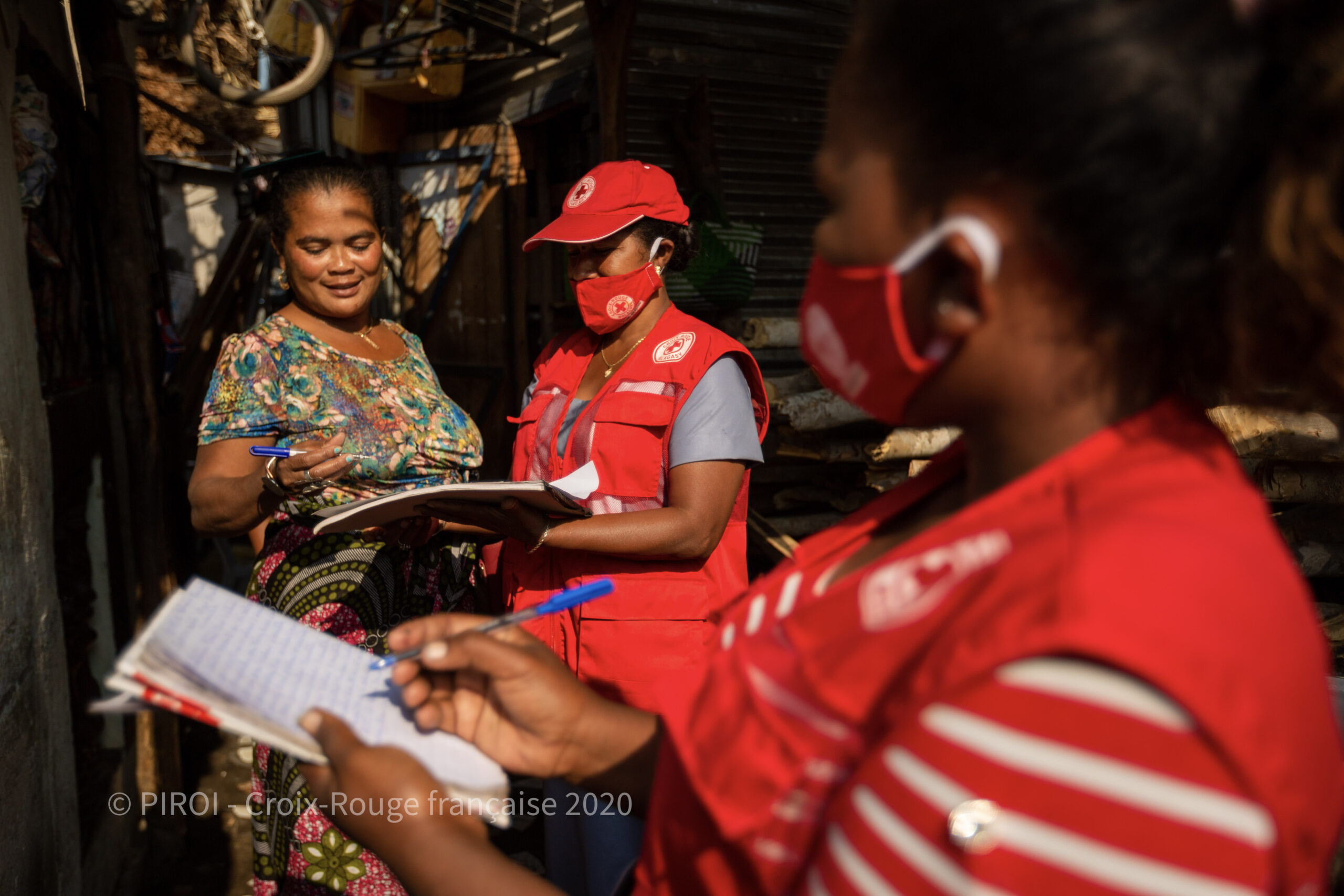
In the field, this begins with listening to communities: women, elderly people, persons with disabilities… Their specific needs are identified and integrated into preparedness and response strategies.
Teams and volunteers are trained to identify risks of violence or exclusion and respond appropriately. In practice, this includes:
Emergency plans integrating PGI issues
Analysis of legislative and regulatory frameworks at national and regional levels
Training response teams to protect vulnerable populations

Distribution of menstrual hygiene kits to preserve the dignity of women and girls

Adapting emergency shelters to make them safer and more accessible

Supporting local organizations working with vulnerable groups to strengthen humanitarian responses
PGI at PIRAC
At PIRAC, we have chosen not to directly implement PGI actions in the field. Instead, our role is to support and strengthen local Red Cross societies by providing expertise.
This positioning reflects an important shift in humanitarian practices, which have traditionally focused on direct intervention. Our added value lies in technical support, capacity building, and delegated management. We work alongside local actors so that they can design, lead, and sustain their own PGI projects.
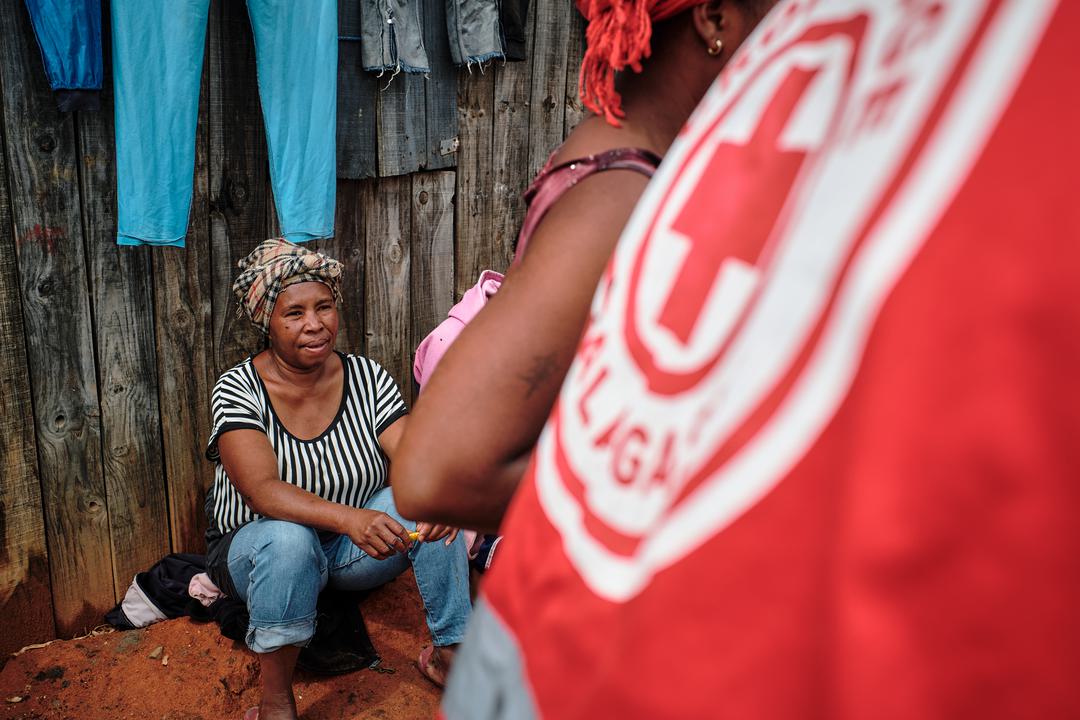
Interview with Marjorie, PGI Officer at PIRAC
How do international treaties, laws, and national policies protect, or fail to protect, people from discrimination and violence, particularly in disaster contexts? This is the central question in Marjorie’s legal framework analysis.
International Commitments
2015
- Sustainable Development Goals (SDGs): Goal 5 – Achieve gender equality and empower all women and girls
2025
COP30 marks a major milestone with the adoption of the Belém Gender Action Plan
The Sendai Gender Action Plan aims to accelerate progress toward gender equality while strengthening disaster risk prevention and reduction