

Educating children today to better protect communities tomorrow
Storms, hurricanes, floods, earthquakes… As extreme weather and climate-related events become more frequent and intense, strengthening disaster preparedness has never been more important. In the Caribbean, where communities are particularly exposed to natural hazards, fostering a culture of risk awareness from an early age is essential.
For several months, the PIRAC (the French Red Cross Regional Intervention Platform for the Americas and the Caribbean) has been supporting the Red Cross Societies of the Dominican Republic and Dominica in the implementation of a new initiative aimed at strengthening disaster preparedness among primary school students.
Called “Red de Escuelas Resilientes” (Network of Resilient Schools)*, the initiative led by the Dominican Red Cross empowers children to become active participants in their own safety by raising awareness of disaster risks and preparedness measures.
Daniel Mateo Guzmán, Director of the National Youth Department of the Dominican Red Cross, explains why educating children today is key to building safer communities tomorrow.
Why is it important to raise awareness of disaster risks among children from an early age?
In the Dominican Republic, we are regularly exposed to natural hazards such as hurricanes, storms, floods, earthquakes and droughts. The most vulnerable schools often lack emergency plans and adequate infrastructure, making entire communities more susceptible to disasters.
For us, it is essential that children do not remain passive victims of disasters but become agents of change. By learning about natural hazards, they develop protective behaviours, understand how to react in emergencies and can even help save lives.
Children also have a powerful multiplier effect. They naturally share what they learn with their families and communities. Educating younger generations about disaster preparedness helps build a more resilient society that is better equipped for the future.
How is this initiative being implemented in schools?
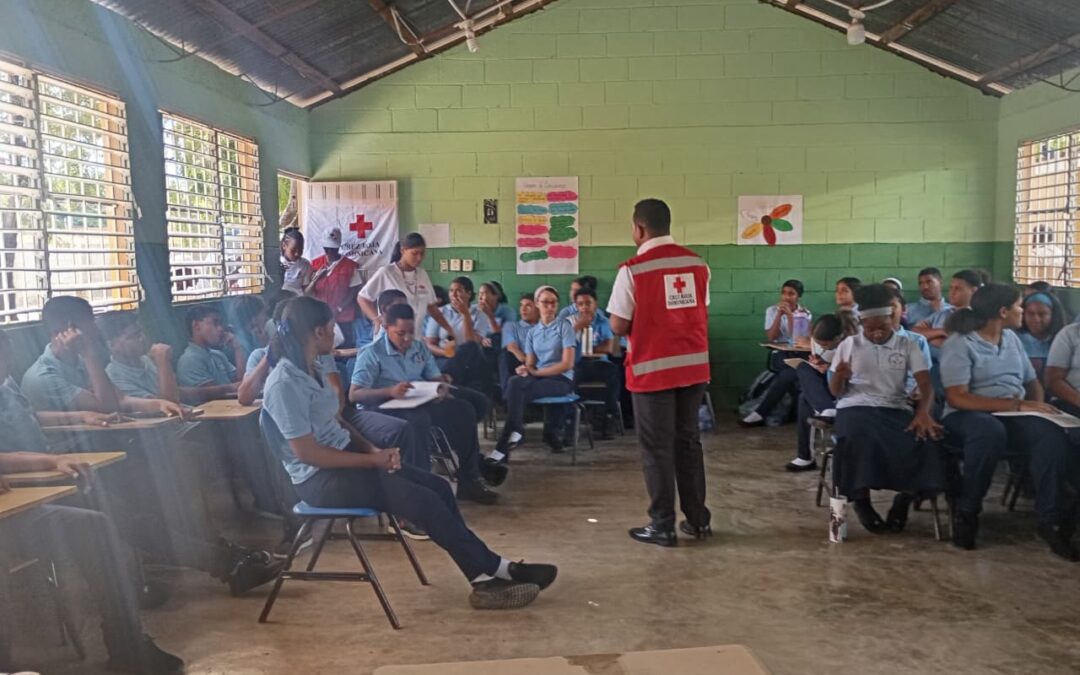
This pilot project aims to strengthen disaster preparedness and prevention in 20 priority schools located in the province of San Cristóbal. It currently targets around 300 students aged 8 to 12.
The initiative works on several levels: developing engaging educational tools, training teachers, and empowering students to understand and respond to risks. The approach is grounded in inclusion, gender equality and sustainability.
The project began with an assessment of existing knowledge on natural hazards and disaster preparedness practices within schools, alongside the establishment of steering and technical committees in collaboration with the Ministry of Education.
You also created a mascot to support the initiative. What is its role?
The mascot, named “Tori the Turtle,” was designed specifically for children. Inspired by the hawksbill turtle, an iconic Caribbean species that is now endangered, Tori helps communicate disaster preparedness messages in a fun and engaging way.
What role do teachers play, and why is their training so important?
Teachers play a fundamental role in the success and sustainability of this initiative. Without adequate training, educational resources may not be used effectively.
The training equips teachers with practical methods to integrate disaster risk management into their daily lessons. Teachers are also key figures for children during emergencies. Their ability to reassure students and respond quickly can make a significant difference.
Before this initiative, how were disaster risks addressed in schools?
Risk awareness was often approached in a reactive and occasional way, mainly after a disaster had occurred or through annual simulation exercises.
Although some topics related to natural hazards were already included in school curricula, there was a lack of practical and adapted educational resources to help teachers address these issues in an engaging and dynamic manner.
What long-term impact do you hope to achieve?
Our ambition is to embed a lasting culture of prevention and preparedness within schools.
In the long term, we hope to support the development of generations of children who are more responsible, more autonomous and able to play an active role in their communities.
We also hope that the methodology developed through this initiative can be adopted more broadly by the Ministry of Education and eventually scaled up at the national level.
How do you work with PIRAC?
The Dominican Red Cross acts as a technical and operational co-lead, drawing on its strong local presence through a network of volunteers across the country.
Our collaboration with PIRAC is very close. PIRAC provides technical expertise in school-based disaster risk reduction, methodological support and essential financial assistance for the implementation of activities.
This partnership also enables us to benefit from experiences and best practices developed in other regional contexts. Beyond the project itself, the objective is to equip the Dominican Red Cross with tools and methodologies that can later be adapted and implemented independently.
What gives you the most hope about this initiative?
It is inspiring to see theory transformed into solidarity and collective action.
Through this initiative, we are doing more than providing educational materials to schools. We are helping to cultivate a genuine culture of resilience that will contribute to building a safer future for the Dominican Republic.

This initiative is made possible through the 3 Oceans Project, funded by the French Development Agency (AFD), and the Ready 360 Project, funded by Interreg Caribbean.
The 3 Oceans Project strengthens the resilience of communities across three ocean basins to disasters and health crises while integrating climate change challenges and gender equality considerations throughout all its activities.
Picture : Dominicana Red Cross