

The Caribbean is among the regions most exposed to disasters worldwide. Hurricanes, floods and earthquakes regularly have severe and sometimes devastating impacts on populations and critical infrastructure.
This vulnerability is amplified by several factors: island territories, growing urban density, socio-economic fragilities and environmental pressure. Climate change further intensifies this situation, increasing both the frequency and intensity of extreme events and reinforcing the need for continuous adaptation by territories and institutions.
In this context, access to safe drinking water, sanitation and hygiene, also referred to as WASH, becomes a priority from the very first stages of a crisis.
A regional training to strengthen Red Cross emergency response capacities
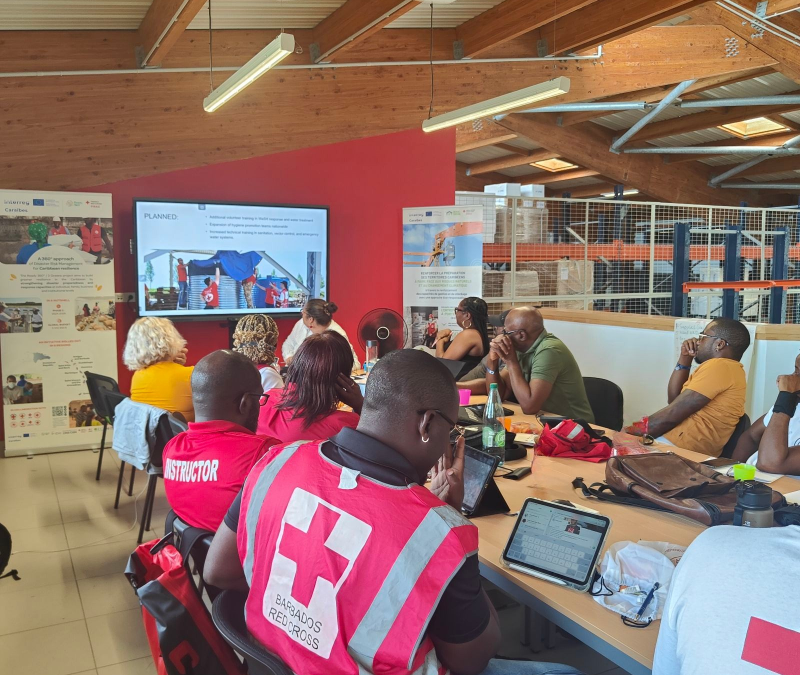
From May 18 to 22, 2026, PIRAC brought together representatives from several Caribbean Red Cross Societies in Guadeloupe, including Saint Lucia, Dominica, Grenada, Saint Kitts and Nevis, Antigua and Barbuda, Trinidad and Tobago, Jamaica, Barbados as well as delegation of Saint-Barthelemy.
Participants came from a wide range of backgrounds, but shared a common objective: strengthening their capacity to respond to WASH needs within their territories.
Beyond national contexts, the challenges remain similar: being able to respond rapidly, effectively and safely for affected populations.
Objectives focused on practice and operational autonomy
The training aimed to enable participants to:
- Understand the different types of WASH interventions in emergency contexts,
- Integrate environmental and protection considerations into emergency response,
- Identify the requirements for installing and operating water treatment units,
- Analyze interventions according to local contexts and existing capacities,
- Developing an action plan to enhance WASH preparedness and response capacities within their Red Cross Societies.
For PIRAC, this initiative also contributes to highlighting existing regional capacities, identifying synergies between programs and strengthening cooperation between actors.
Learning by doing: a training grounded in real-life conditions
The program was built around one simple principle: making learning concrete.
Understanding emergency WASH interventions, integrating environmental and protection issues, analyzing operational contexts… but above all: practicing.
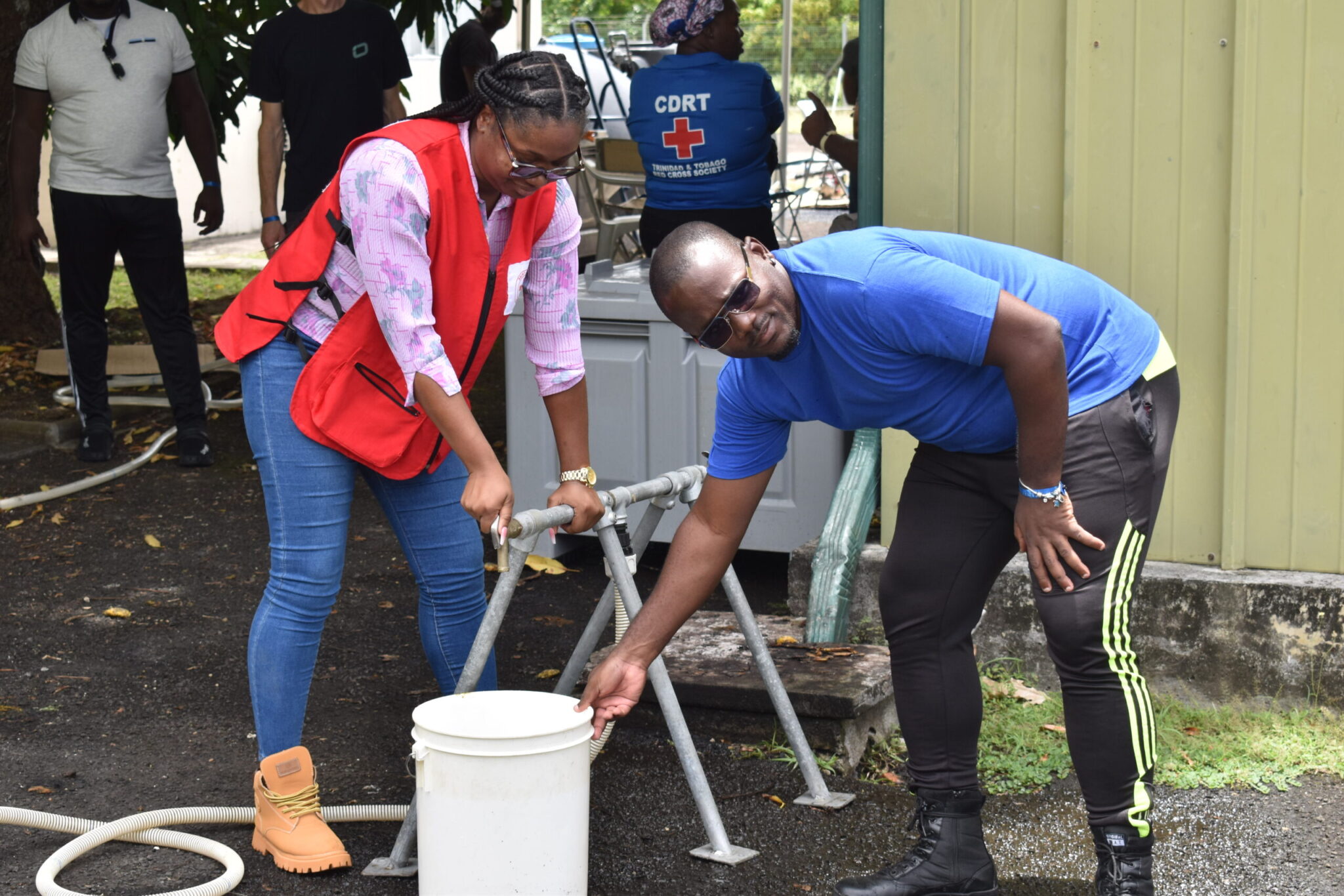
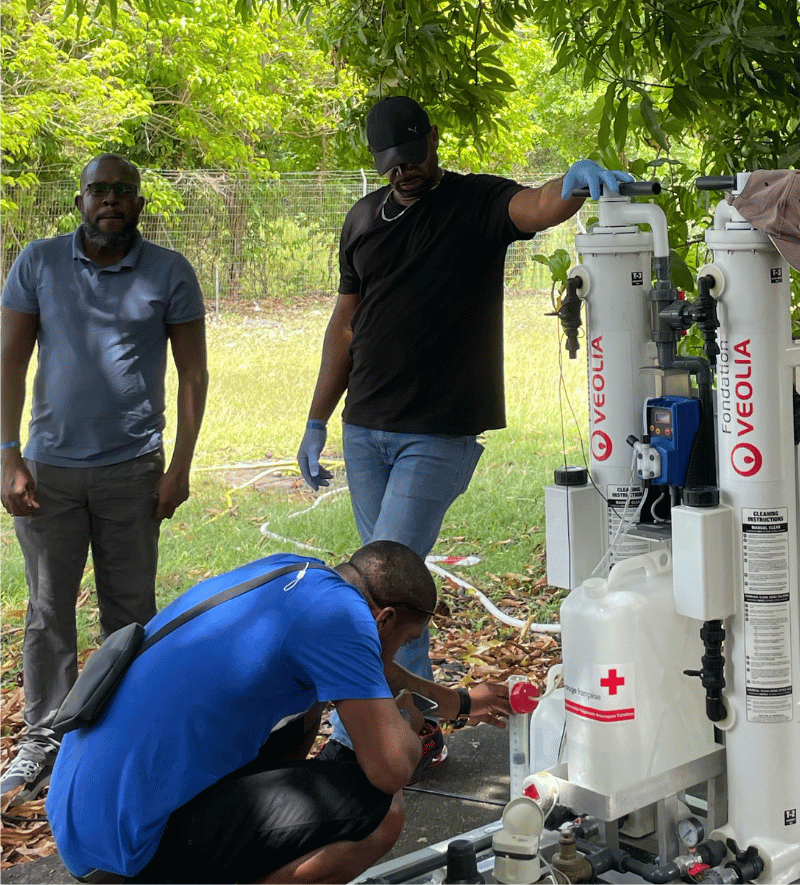
The highlight of the training was a full-scale exercise during which a water treatment unit was deployed, allowing participants to produce safe drinking water in conditions close to a real emergency response.
This hands-on experience often proves decisive in helping participants fully understand the role they may have to play in the field.
Françoise RASSE, volunteer with the Saint-Barthélemy Red Cross, reflected on the experience:
“We all come from different territories. It is very interesting to see that water and hygiene are issues that bring us together. Each of us comes with our own experience and challenges linked to our territory. What impressed me the most was how easy the water treatment station was to install and operate. It is easily transportable and usable as long as we practice regularly.”
A regional dynamic of cooperation and resilience
This training is also part of a broader regional cooperation effort carried out alongside the International Federation of Red Cross and Red Crescent Societies (IFRC) and the Central America Regional WASH Hub.
The objective is to pool resources, strengthen capacities and build a more coordinated response to crises.
In a region regularly affected by extreme events, this cooperation is not simply a strategic choice — it is an operational necessity.
Capitalization and continuous learning
Beyond the training itself, follow-up and knowledge capitalization mechanisms are planned to ensure the sustainability of the learning outcomes.
Individual and collective evaluations, structured feedback sessions and post-training follow-up will help build a true learning community among participants.
The objective is to strengthen territorial autonomy and support the practical implementation of the skills acquired in the field.
A meaningful experience for participants
Feedback from participants highlights the impact of this immersive approach.
The President of the Antigua and Barbuda Red Cross, Dr. Humphrey, emphasized:
“The most important thing for me was the practical experience: seeing how we can produce safe drinking water for people who do not have access to it during a disaster. This is an essential role that we play.”
Tyrone Peters also highlighted the direct usefulness of the training:
“We will definitely take the knowledge we have gained and apply it in our country if needed. We now have the skills and expertise to ensure we can provide safe drinking water to communities in the event of a disaster, especially with the upcoming cyclone season.”
Strengthening capacities to better anticipate crises
Through this initiative, PIRAC reaffirms its commitment to sustainably strengthening local capacities in order to better anticipate, prepare for and respond to crises.
In a context of growing risks, territorial resilience relies above all on collective capacity building and knowledge sharing.
This initiative was made possible through the Ready 360 project funded by Interreg Caribbean, the 3 Oceans project funded by French Development Agency, and the support of the CMA CGM Foundation.