

Twelve participants from eight Caribbean Red Cross Societies took part in a regional training-of-trainers course on humanitarian logistics and warehouse management, co-facilitated by PIRAC and the Antigua and Barbuda Red Cross. Beyond learning how to use a stock management system, the training aims to harmonise practices, strengthen interoperability between Red Cross Societies, and build collective capacities for disaster preparedness and response across the region.
Strengthening logistics management practices within Red Cross Societies
Across the Caribbean, Red Cross Societies hold stocks of humanitarian supplies, ranging from emergency kits to materials used in their day-to-day activities. But having supplies in stock is not enough: they must also be managed effectively, properly monitored and kept available when needs arise.
This is the purpose of the regional training organised by PIRAC. The aim is to build a regional network of resource persons who can pass on these skills within their own Red Cross Society, to both staff and volunteers. This is particularly important in a context where frequent volunteer turnover means that new people need to be trained regularly and common practices maintained.
The training draws in particular on the Logistics Books developed by the PIROI and the International Federation of Red Cross and Red Crescent Societies (IFRC). Topics covered include stock organisation and storage, incoming and outgoing stock management, the “First In, First Out” (FIFO) principle, as well as the safety of people and equipment and the maintenance of storage facilities.
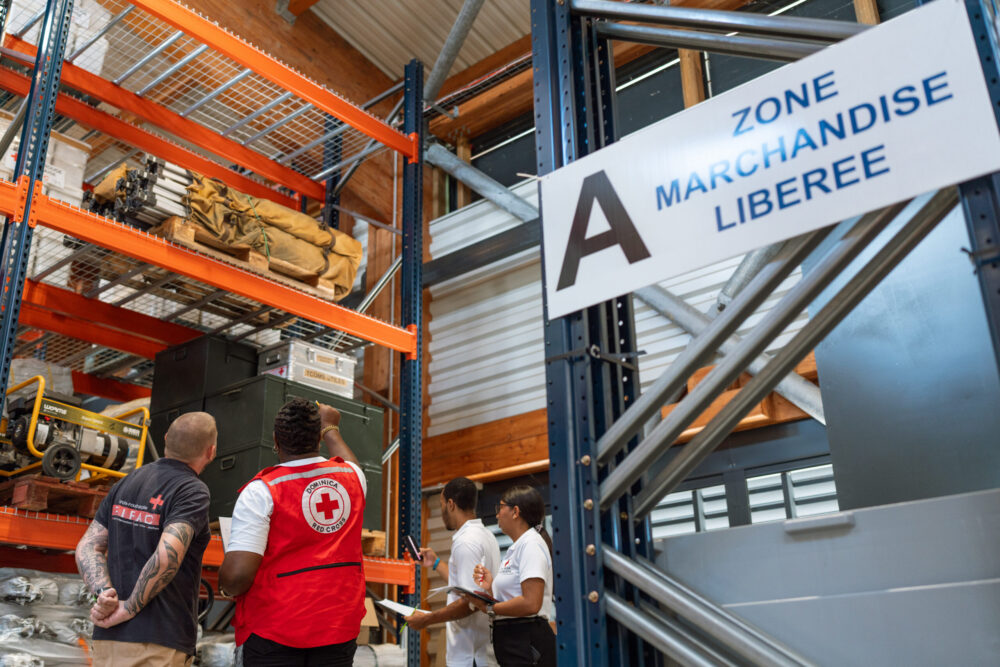
PLAYS: a system to improve humanitarian stock management
The training also gave participants the opportunity to discover PLAYS or further develop their skills in using it. PLAYS is a Warehouse Management System (WMS) which PIRAC makes available to and provides ongoing support for Red Cross Societies.
Beyond basic inventory management, the tool centralises information on available items, tracks stock movements and maintains a record of operations. It also facilitates the preparation of logistics documents, such as waybills, and makes it possible to view stock locations on a map.
To put these features into practice, participants took part in a simulation exercise using a fictional warehouse: setting up the warehouse, registering items, managing incoming and outgoing goods, and carrying out an inventory.
The Antigua and Barbuda Red Cross also shared its hands-on experience of using PLAYS. Since 2022, it has fully integrated the tool into its daily practices. Its logistics officer, Jameel, co-facilitated the training alongside PIRAC, sharing examples drawn from his field experience.
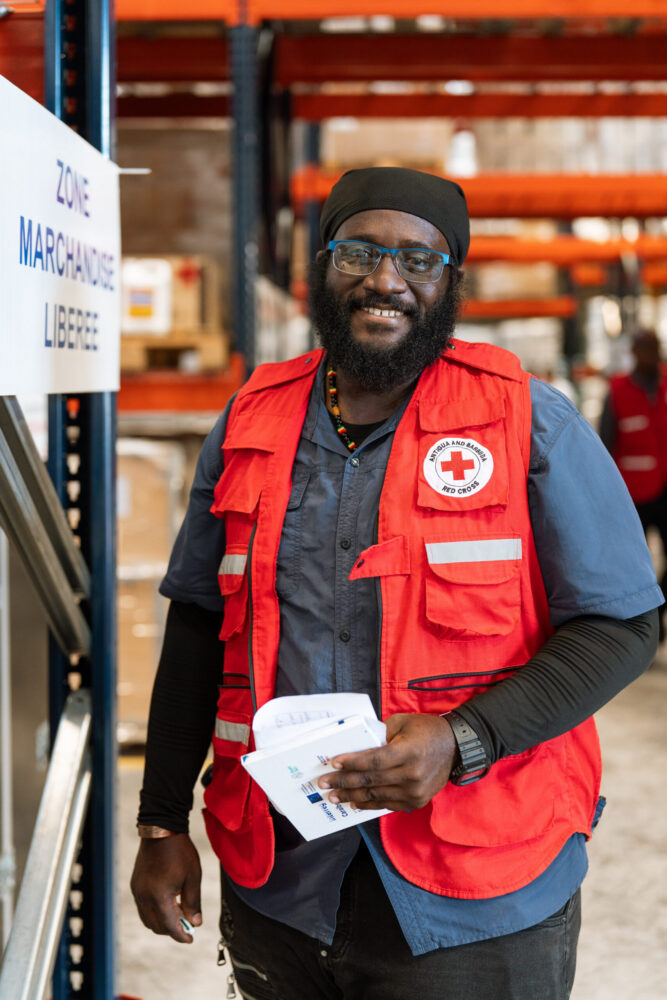
Jameel, logistics officer in Antigua and Barbuda: sharing expertise to strengthen regional cooperation
For Jameel, logistics officer at the Antigua and Barbuda Red Cross, mastering PLAYS has already delivered tangible results within his organisation.
“Since 2022, our mastery of the warehouse management system has significantly improved inventory accuracy and response times. This technical foundation helps ensure that essential supplies are available and ready for deployment, directly benefiting people affected by crises or disasters.”
By acting as a trainer for his Caribbean counterparts, Jameel is now helping share this experience beyond his own territory. He sees this kind of peer-to-peer cooperation as essential to collective progress.
“Sharing this experience with other Red Cross Societies encourages vital knowledge exchange across the Caribbean. Learning from one another helps us strengthen our collective capacities and respond more quickly to regional challenges by drawing on our respective areas of expertise.”
Better stock management to strengthen disaster preparedness and response
Beyond individual training, the benefits are also regional. Better management of humanitarian stocks enables Red Cross Societies to have a clearer picture of their resources, anticipate their needs more effectively and mobilise available supplies more quickly.
For PIRAC, having better visibility of stocks across the different territories is also a way to strengthen regional logistics coordination. Geolocating stocks makes it possible to identify resources available near a disaster-affected area and consider mobilising them, including to support a neighbouring Red Cross Society.
Feedback from participants highlights the value of this approach: several said they wanted to meet with their senior management teams soon after returning home to roll out good practices and PLAYS features within their organisations.
By supporting Red Cross Societies in developing their skills and encouraging the sharing of experience between them, PIRAC is helping build a more structured, complementary and operational regional logistics network.
This action was made possible through the READY 360 project, funded by Interreg Caribbean and the European Union’s humanitarian aid, in partnership with the Italian Red Cross and the International Federation of Red Cross and Red Crescent Societies (IFRC).