

Interview with Marjorie, Protection, Gender and Inclusion (PGI) Officer at PIRAC
On the occasion of March 8 | International Women’s Rights Day
Marjorie, what does Protection, Gender and Inclusion (PGI) concretely mean in disaster management?
Protection, Gender and Inclusion (PGI) is the approach adopted by the Red Cross Movement to address the causes, risks and consequences of violence, discrimination and exclusion within its organizations and throughout its field operations and activities.
Women, men, children, older persons, people with disabilities, and individuals from minority groups do not face the same risks or barriers during crises.
For example, the United Nations has found that femicides increase by 28% during heatwaves. This highlights how climate-related events also have strong social and gendered impacts.
It is therefore essential to provide tailored responses in order to avoid creating or exacerbating existing inequalities, and ideally, to help reduce them.
At PIRAC, our role is to support humanitarian and institutional actors in the Caribbean so that protection and inclusion are not treated as separate issues, but are fully integrated across all actions.
Why develop this approach in the Caribbean?
Caribbean societies are shaped by rich cultural, social and historical diversity. At the same time, they are influenced by strong social norms related to gender roles, family structures, and the place of minorities. These realities directly affect how people experience crises.
For instance, homosexuality was only decriminalized in some territories of the Lesser Antilles as recently as July 2025. LGBTQ+ populations remain largely invisible, and their needs are not reflected in existing legislation. As a result, they remain insufficiently protected when their fundamental rights — such as access to health or safety, are at risk, even though progress is underway.
Understanding this context is essential to design responses that are both effective and equitable.
In addition, in 2022, PIRAC conducted a study across three Caribbean territories, which highlighted a significant lack of awareness around gender concepts. Many stakeholders did not know how to concretely integrate these concepts into emergency plans or national strategies. The study also revealed only partial understanding of existing legal frameworks and political commitments related to gender equality, both in general and specifically in disaster risk management.
This led to a sense of illegitimacy among actors when it came to addressing these issues.
One key conclusion emerged: knowledge builds legitimacy, and legitimacy drives action. Without a clear understanding of legal and institutional frameworks, it is difficult to act effectively.
It is from this finding that the regional legal framework analysis was initiated.
What does this legal framework analysis consist of?
The analysis aims to better understand how international and regional treaties, as well as national laws and policies, protect, or fail to protect, individuals from discrimination and violence, particularly in disaster contexts.
We reviewed a range of laws to assess whether and how they integrate gender considerations. More broadly, the objective is to identify both progress and gaps in order to strengthen protection mechanisms.
We also drew on numerous initiatives led by regional and national actors. By giving them a voice within this analysis, we highlighted how, in practice, they respond to the needs of marginalized communities — either by leveraging the law or by addressing gaps in existing policies.
For example, the regional coalition led by ECADE has used the law as a strategic tool to advocate for LGBTQ+ rights in the Eastern Caribbean. Its efforts contributed to a historic wave of decriminalization of homosexuality, demonstrating that legal frameworks can be powerful drivers of change.
Ultimately, we formulated around thirty concrete recommendations that disaster risk management and PGI actors can implement in areas such as partnerships, training, and operational processes.
What are the next steps in your work?
We will soon share these findings with local Red Cross societies and disaster risk management stakeholders through webinars and practical workshops.
The objective is clear: to provide operational tools to integrate PGI into emergency plans, national strategies and field projects, while also strengthening actors’ legitimacy and providing them with solid legal arguments.
On this International Women’s Rights Day, what message would you like to share?
March 8 reminds us that women’s rights are a key indicator of the level of justice within a society. But talking about gender is not only about women, it is about equity, dignity, and protection for everyone.
In the Caribbean, progress is real. It may be gradual, but it is happening. PIRAC’s role is to support these dynamics by strengthening knowledge, supporting local actors, and promoting PGI as a truly transversal approach.
It is no longer viable to implement disaster risk management actions that ignore gender considerations and the challenges faced by historically marginalized communities. Fully integrating gender and human rights dimensions is essential, not only for reasons of justice and equity, but also for effectiveness and efficiency in crisis and disaster response.
Because effective disaster management is inclusive disaster management.
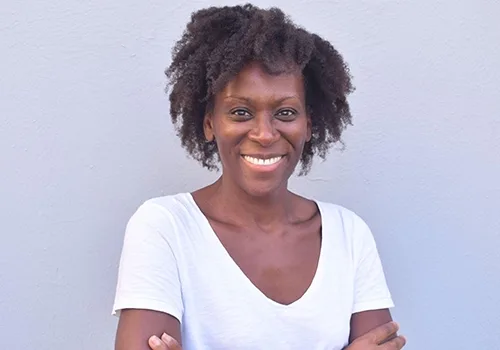
Marjorie Thimon, Protection, Gender and Inclusion Officer | PIRAC – French Red Cross
This initiative is made possible through the #3Oceans project, funded by the French Development Agency (AFD). The project aims to strengthen the resilience of territories across three ocean basins to disasters and health crises, by integrating climate change challenges and gender inequalities into all its actions.