

When Hurricane Melissa struck Jamaica on 28 October 2025, with winds reaching nearly 300 km/h, it did not only tear off roofs and flood entire neighborhoods. It also deprived thousands of families of something essential: safe drinking water.
Across the island, water networks, already fragile before the storm, became even more unstable, forcing many households to rely on improvised water sources, sometimes dangerous for their health.
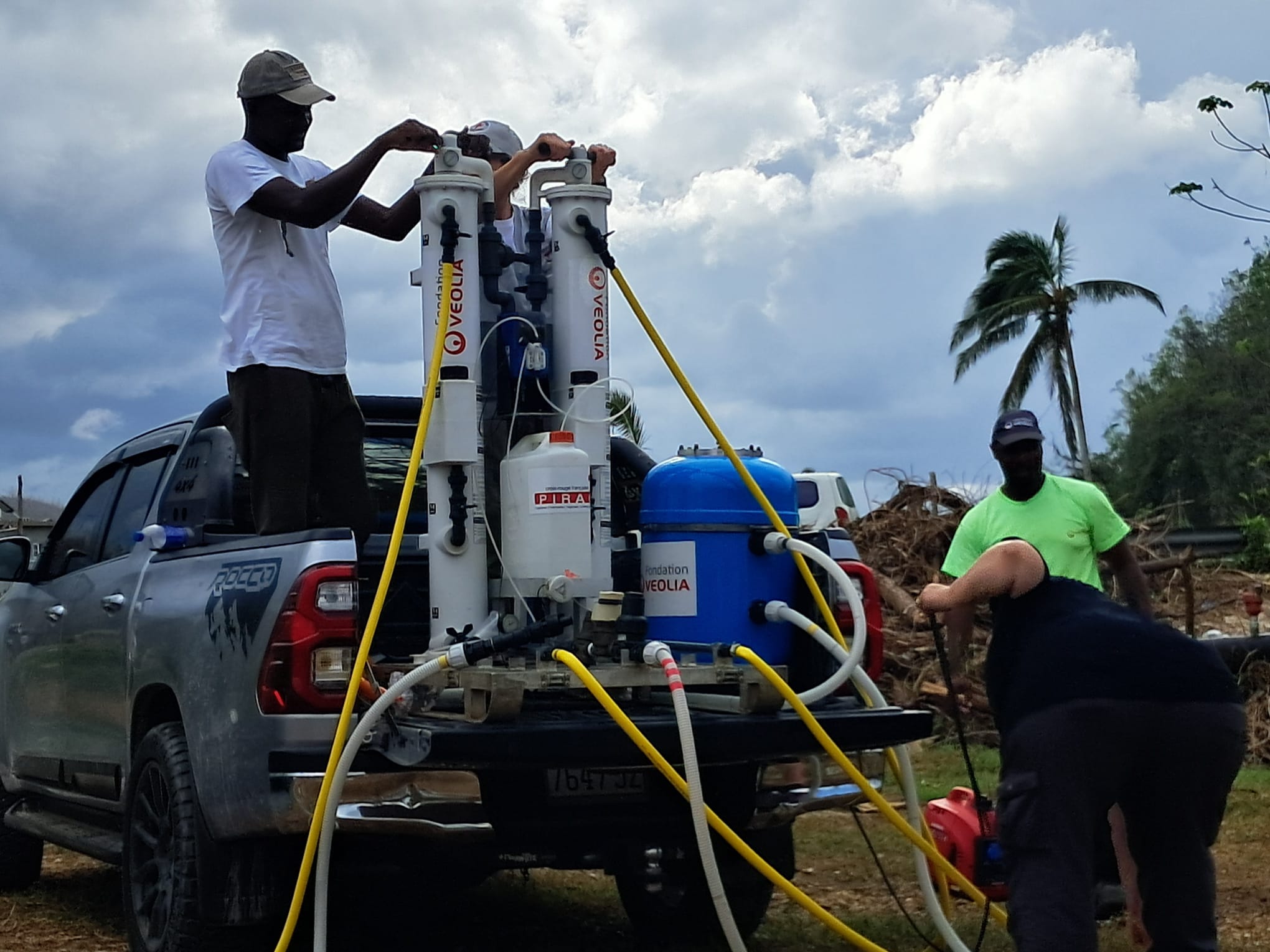
To respond to this emergency, alongside the Jamaica Red Cross, we implemented an emergency water supply response at the heart of the most affected areas, in partnership with the Veolia Foundation.
A water point at the heart of the crisis
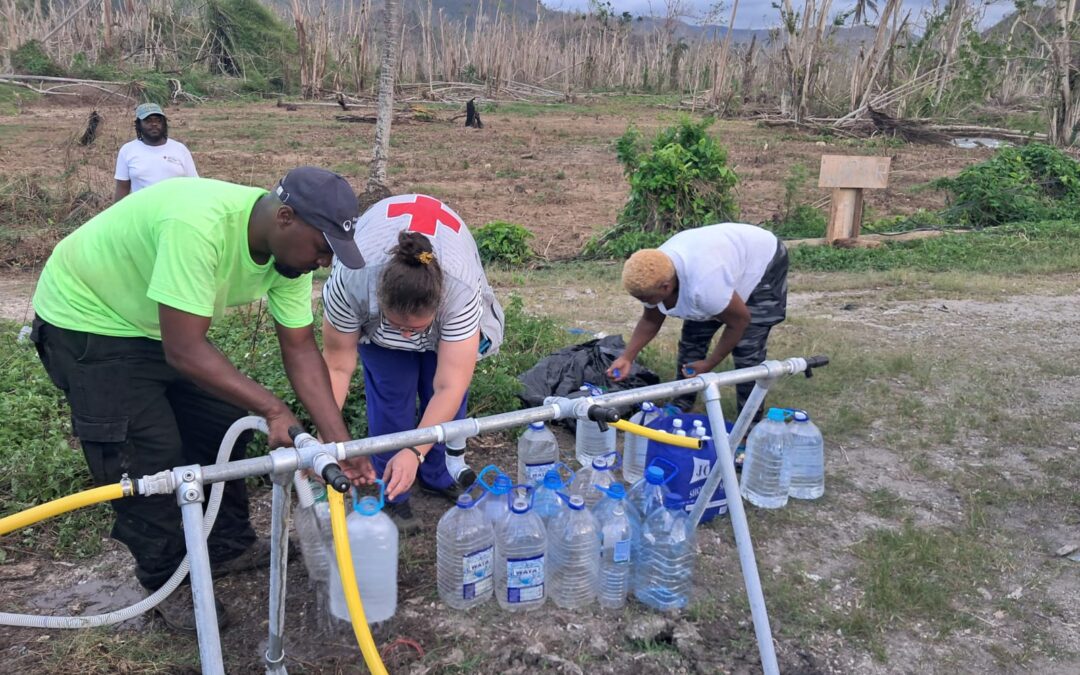
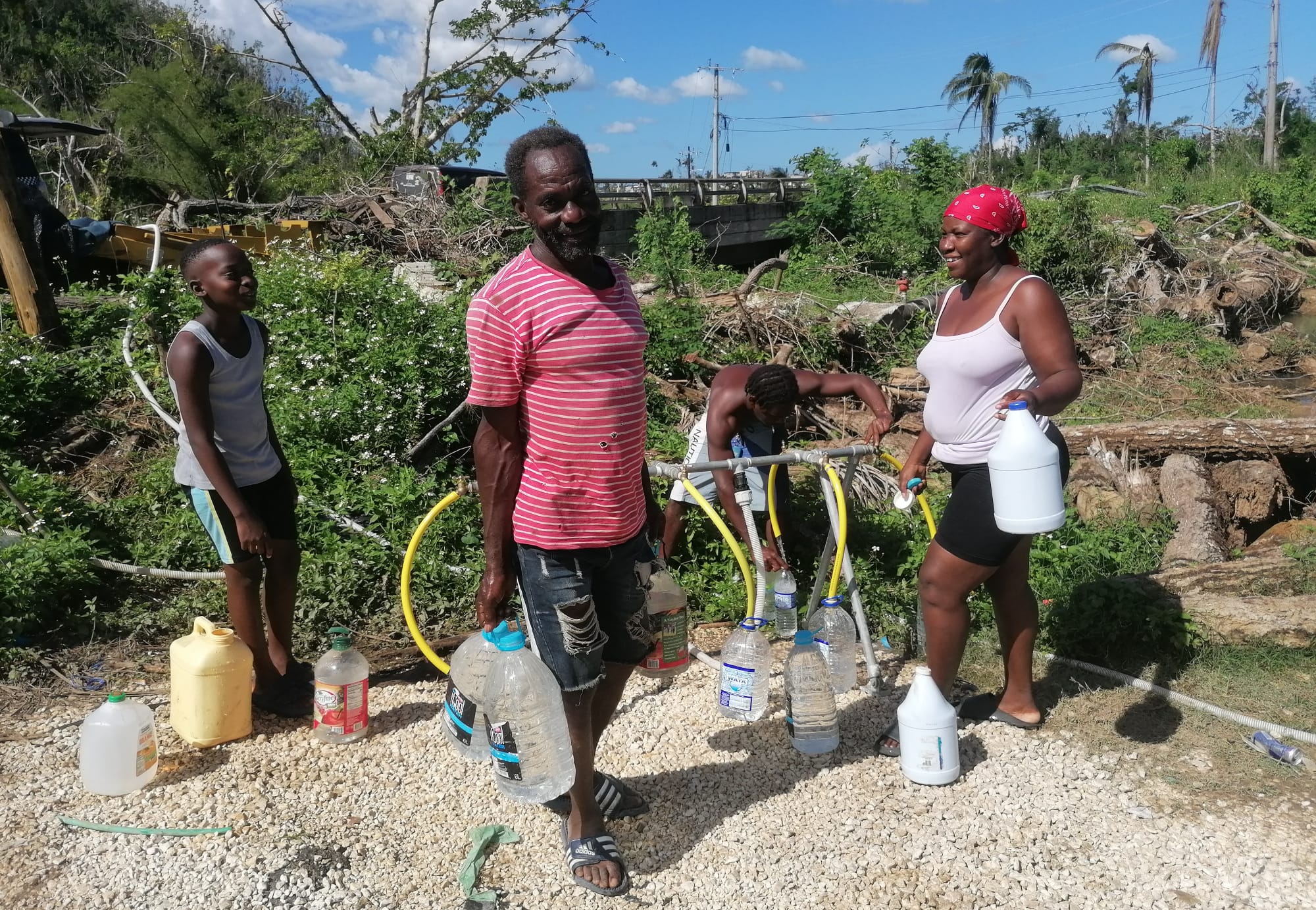
In Cambridge, in the parish of St James, within a severely affected community, a Water Treatment Unit was installed starting on 20 November 2025. Water is pumped from a nearby river, then filtered and disinfected to make it safe for drinking, before being stored and distributed to residents. Every day, families come to collect water using jerrycans, bottles or large plastic containers, sometimes for themselves, sometimes for elderly neighbors or people without access to transportation.
Very quickly, local solidarity formed around this water point. “Residents who owned pick-up trucks or vans would come to fill containers for all their neighbors,” explains Maria-Bonita Amorin Da Silva, Emergency Preparedness and Response Coordinator at PIRAC. “During the first week, people mainly needed to talk and share what they had been through. This water distribution point was not only a technical solution, but also a space for exchange.”
Water, a vital resource
When interviewed by our teams, two out of three people using this water point stated that it was their only source of safe drinking water. Without this installation, and without the financial means to purchase bottled water, the alternative would have been river water, often responsible for diarrheal diseases and other waterborne illnesses.
As early as 20 November, the system was producing more than 47,300 liters of drinking water per week, equivalent to the daily drinking water needs of over 2,700 people, according to international humanitarian standards.
“During such disasters, key infrastructure can also suffer significant damage,” explains Maria-Bonita. This is why, in parallel with the water distribution point, teams also rehabilitated the water supply system of the Cambridge health center, alongside roof repairs carried out by the Ministry of Health and Wellness, ensuring the delivery of clean water to healthcare staff.
A response that prepares for the future
Over the weeks, the daily operation of the water treatment unit relied on the growing involvement of several local actors. Among those particularly engaged was Chattour, a local driver mobilized from the very first days to support the movements of Red Cross teams. A former plumber, he quickly became interested in the technical aspects of the unit: connections, maintenance, flow management and the resolution of minor breakdowns.
Supported by PIRAC and the Veolia Foundation, Chattour received specific training on the installation and operation of a water treatment unit, alongside other volunteers from the Jamaica Red Cross and Veolia Jamaica. His commitment helped strengthen service continuity and facilitate the transfer of skills to local teams.
“Water is something everyone needs, every single day. Understanding how this unit works was a way to concretely help my community recover,” he explains.
As part of the transition and the gradual end of the emergency phase, two water treatment units remain in Jamaica at the disposal of the Jamaica Red Cross, strengthening its long-term capacity to respond to future crises.
Chattour is now a volunteer with the Jamaica Red Cross and serves as a local focal point for the use and reactivation of these units when needed.
Closing of the emergency operation
On 16 January 2025, the emergency operation in Jamaica officially came to an end. In total, 365,000 liters of safe drinking water were produced.
In addition to the water response, the operation also enabled the delivery of 500 emergency kits, containing essential items such as hygiene products, shelter materials, cleaning tools and kitchen utensils, to meet the immediate needs of households affected in the most impacted areas.
To learn more, read also: Hurricane Melissa: our teams provide assistance to affected communities in Jamaica.
This operation was funded by the Crisis and Support Centre (CDCS) of the French Ministry for Europe and Foreign Affairs and the French Red Cross. It was carried out in partnership with the Jamaica Red Cross, the IFRC, the Veolia Foundation, the French Armed Forces in the Caribbean, and the Embassy of France in Jamaica.